5 Common Coffee Brewing Mistakes (And How to Fix Them)
You bought great beans. You invested in a solid setup. So why does your morning cup still taste … off?
Here’s the thing most people don’t realize: Your coffee is only as good as your process. The beans matter, but water quality, grind size, temperature, ratios, and even your pouring technique can make or break the cup. The good news? Once you know what to look for, these coffee mistakes are easy to fix.
Whether you’re just starting to brew specialty coffee at home or you’ve been at it for years, this guide walks through the five most common mistakes we see — and how to fix them.
Mistake #1: Overlooking Your Water Quality
Why It Matters
Your coffee is only as good as your water. While your tap water might be perfectly safe to drink, its mineral content and overall hardness can dramatically affect how your coffee extracts — and ultimately how it tastes in the cup.
This is one of the most overlooked coffee mistakes, and it’s often the hidden reason a bag of incredible beans still produces a mediocre cup.
The Fix
Use freshly filtered water every time you brew. A simple carbon filter removes chlorine and off-flavors without stripping out the minerals your coffee needs for balanced extraction.
If you prefer bottled water, check the label — you want a neutral pH between 6.5 and 7.5. Skip distilled water entirely; it lacks the mineral content needed to properly extract flavor from coffee grounds.
When it comes to temperature, the ideal range is between 195°F and 205°F. That’s the sweet spot where clean, balanced extraction happens
Mistake #2: Getting the Grind Size Wrong
Why It Matters
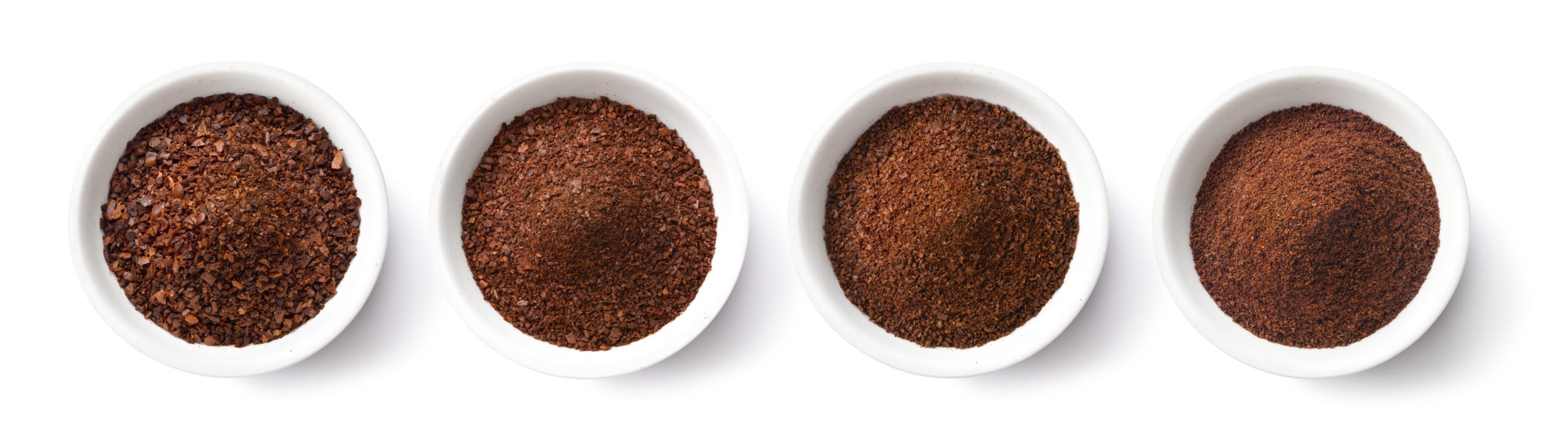
Grind size controls how quickly water passes through your coffee and how much surface area is exposed during brewing. If it’s too fine for your method, water lingers too long, pulling out harsh, bitter compounds. Too coarse, and it rushes through, barely picking up flavor.
Freshly ground coffee yields the most nuanced aromatics and flavors. If you’re using the same pre-ground bag for your French press and your drip machine, you’re compromising every cup.
The Fix
Match your grind to your brew method. Here’s a quick reference:
• Coarse: French press, cold brew
• Medium-coarse: Chemex, Clever Dripper
• Medium: Drip coffee maker, siphon
• Medium-fine: Pour-over (V60, Kalita Wave)
• Fine: Espresso, AeroPress (short brew), Moka pot
If you’re in the market for a grinder, don’t settle for one with blades like a blender. Blade grinders chop beans unevenly, meaning some particles over-extract while others under-extract — all in the same cup. Instead, opt for a burr grinder, which is designed to produce a uniform particle size. It’s one of the best investments you can make if you’re serious about brewing specialty coffee at home.
Mistake #3: Storing Your Beans the Wrong Way
Why It Matters
You can start with the most meticulously sourced, perfectly roasted beans in the world and still end up with a flat, lifeless cup if you store them incorrectly. Coffee’s enemies are air, moisture, heat, and light. Exposure to any of these accelerates oxidation, stripping away the volatile aromatic compounds that give specialty coffee its vibrancy.
The most common culprits? Keeping beans in the original bag after it’s been opened, storing them in a clear container on the counter, or putting them in the fridge or freezer, thinking it will keep them fresh. (Spoiler: it won’t. The moisture and competing odors inside your fridge will compromise flavor quickly.)
The Fix
Knowing how to store coffee beans for freshness comes down to one principle: keep them sealed, cool, dark, and dry.
- Use an opaque, airtight container. Ceramic or stainless-steel canisters with a one-way CO₂ valve are ideal. Mason jars work if stored in a cabinet, not on the counter.
- Store at room temperature. A cool pantry or cupboard away from the stove is perfect. Skip the fridge entirely.
- Buy in smaller batches. Whole beans peak within about two to four weeks of roasting. Smaller, more frequent purchases mean you’re always brewing at peak freshness.
- Only grind what you need. Ground coffee goes stale exponentially faster than whole beans — grind just before brewing for the biggest flavor payoff.
Mistake #4: Ignoring the Coffee-to-Water Ratio
Why It Matters
Eyeballing your coffee dose is one of the fastest ways to brew an inconsistent cup. Too much coffee creates an overconcentrated punch, too little results in a watery, forgettable brew. Without a consistent ratio, you’re essentially guessing every morning — and you’ll never be able to replicate the cup you loved yesterday.
The Fix
A 1:15 ratio (one part coffee to 15 parts water) is a great starting point for most brew methods. For a standard 12-oz cup, that’s roughly 24 grams of coffee to 360 grams of water.
The beauty of working with ratios is that every recipe scales up or down effortlessly. Brewing for one? Use 15 grams of coffee and 225 grams of water. Making a full pot for guests? Just multiply — the ratio stays the same.
Mistake #5: Pouring Without Control
Why It Matters
Most people simply dump hot water over their grounds and hope for the best. But how you pour matters more than you might think. An uncontrolled pour creates uneven saturation, with some grounds getting flooded while others barely get wet. The result is uneven extraction — bitter and sour notes competing in the same cup.
This is especially true for pour-over methods, where the pour is your primary tool for shaping the brew.
The Fix
This is where a gooseneck kettle earns its place on your counter. Making craft coffee is one part science and one part art, and a gooseneck kettle is designed to give you precise control over the flow of water as it cascades onto the coffee — much like a painter with a brush.
Pouring with a gooseneck kettle allows you to ensure even extraction by controlling exactly where the water goes and how fast it gets there. It also makes it easier to hit your target water volume for a consistent brewing ratio.
Better Coffee Starts with Better Habits
None of these fixes require expensive equipment or barista-level training. They’re small changes that take seconds to implement but can transform every cup you brew.
Ready to put these tips to the test? Browse our single-origin and blend collections at Sum>One Coffee Roasters and experience what happens when great beans meet great technique.